
Impact Pathways
TIP identified seven opportunities where the tire sector can have transformative impact and contribute to the SDGs across three main themes: supply chain, operations, and products and services.
All TIP members are working to expand the use of low-carbon energy sources in their operations, reduce emissions and operational waste, and drive water stewardship efficiency.

Energy
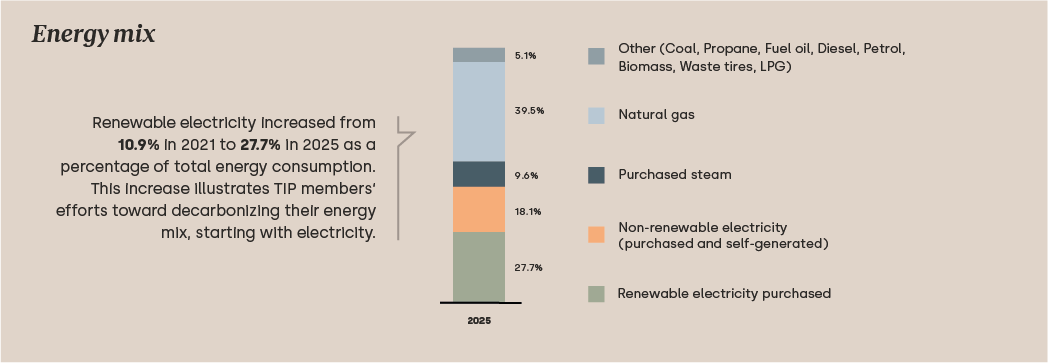
TIP members' energy mix
2021-2025
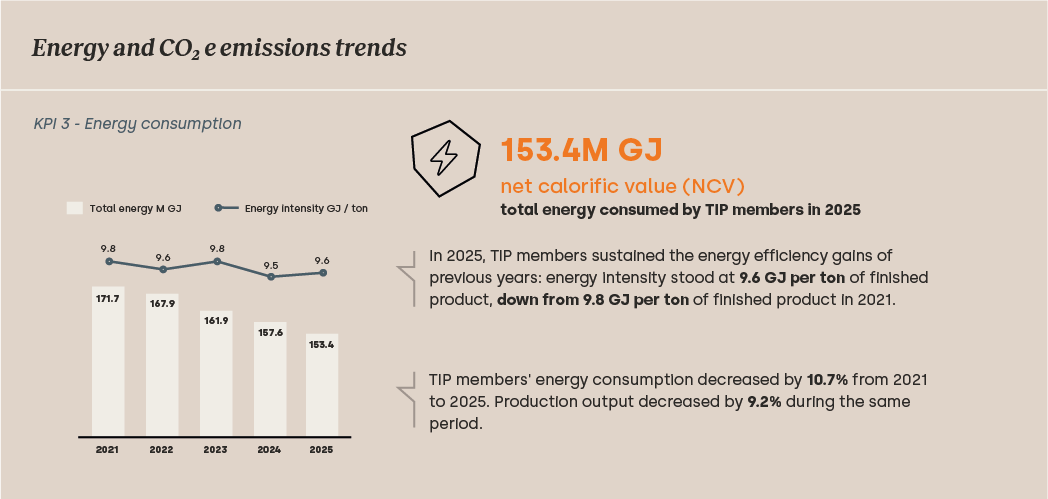
TIP members' total energy consumption and energy intensity
2021-2025
TIP member’s electricity consumption derived from renewable sources
2021-2025
TIP members’ energy consumption decreased by 10.7% from 2021 to 2025, while renewable electricity purchased grew from 25.7% to 60.5% of total electricity. Energy intensity fell to 9.6 GJ per ton of finished product, from 9.8 GJ per ton in 2021. CO2e emissions intensity fell to 0.51 tons CO2e per ton of output in 2025, down 29.2% versus 2021 and 4.9% versus 2024.

CO2
TIP members' total CO2 emissions and CO2 intensity
2021-2025
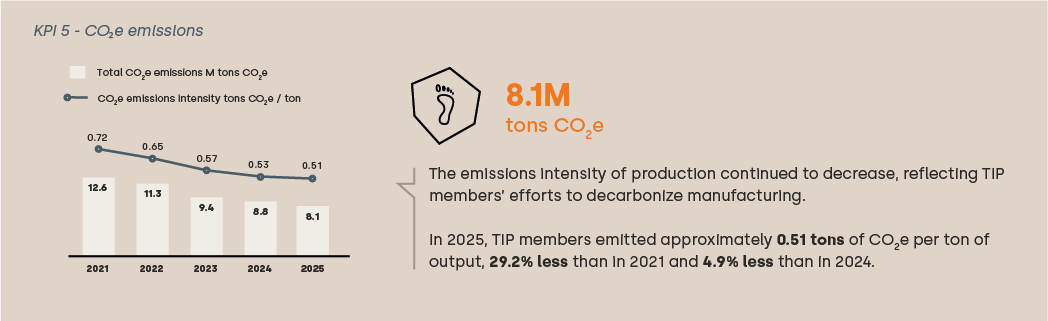
CO2 emissions intensity fell to 0.51 tons CO2e per ton of output in 2025, down 29.2% versus 2021 and 4.9% versus 2024.

Science based targets
TIP members and science based targets
2021-2025
90% of TIP members had a validated Science Based Target in 2025, up from 30% in 2021. The validation of SBTs has become an established practice across the TIP membership, reflecting the sector’s continued progress toward greater ambition in decarbonization.

Water
TIP members' water intake from water stressed and non-water stressed Areas
2021-2025
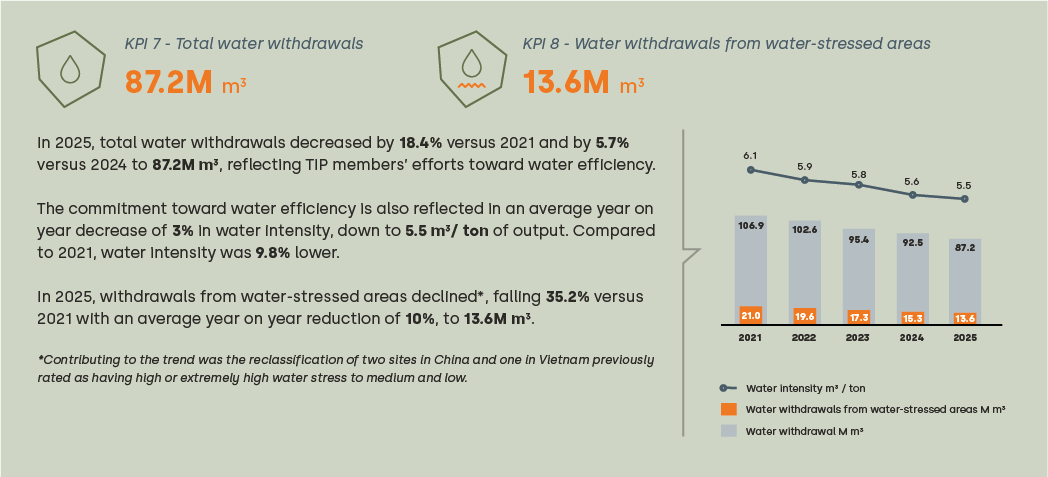
Total water withdrawals fell 18.4% versus 2021 to 87.2M cubic meters, with withdrawals from water stressed areas down 35.2% versus 2021 to 13.6M cubic meters.

Waste
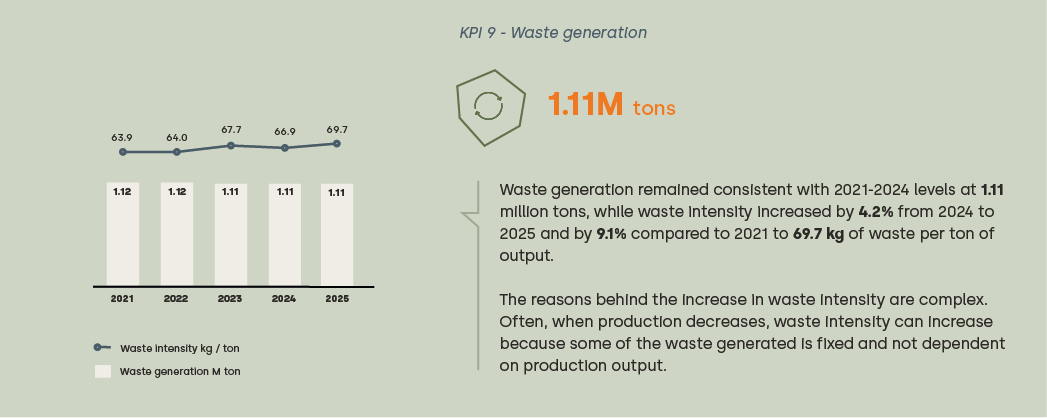
TIP members' total waste generated and waste intensity
2021-2025
Breakdown of waste sent for elimination and recovery
2021-2025

Waste generation held steady at 1.11 million tons, though waste intensity rose 9.1% versus 2021 to 69.7 kg per ton of output.

ISO
Percentage of TIP member sites that are ISO 14001-certified
2021-2025
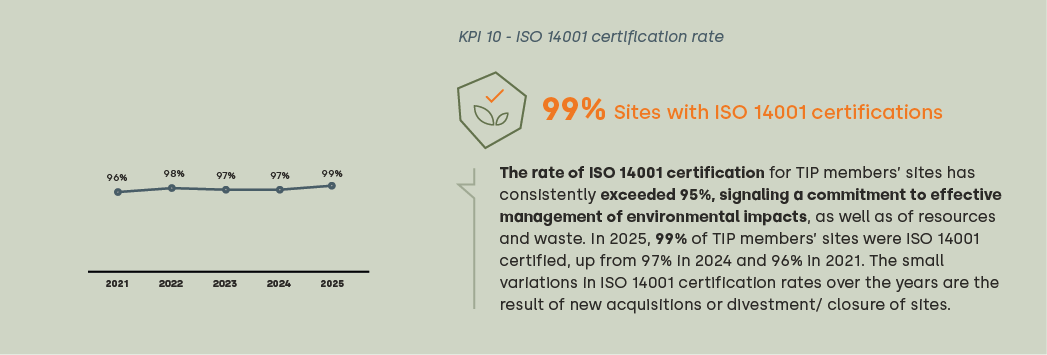
99% of TIP members’ sites were ISO 14001 certified in 2025, up from 96% in 2021.
