cris-ovalle-YTk8tO3PGdA-unsplash-scaled

Impact Pathways

TIP identified seven opportunities where the tire sector can have transformative impact and contribute to the SDGs across three main themes: supply chain, operations, and products and services.

Supply chain

Operations

Products and services

Impact pathway 5:

Further leverage multi-stakeholder efforts

toward evidence-based solutions that address Tire and Road Wear Particles (TRWP).

Goal

12

By 2030, achieve the sustainable management and efficient use of natural resources. By 2030, achieve the environmentally sound management of chemicals and all wastes throughout their life cycle, in accordance with agreed international frameworks, and significantly reduce their release to air, water
and soil in order to minimize their adverse impacts on human health and the environment. By 2030, substantially reduce waste generation through prevention, reduction, recycling and reuse. Encourage companies, especially large and transnational companies, to adopt sustainable practices and to integrate sustainability information into their reporting cycle. By 2030, ensure that people everywhere have the relevant information and awareness for sustainable development and lifestyles in harmony with nature.

Target

12.4

Further leverage multi-stakeholder efforts to achieve evidence-based solutions that address tire and road wear particles.

Our actions

  1. Engage with stakeholders and other sectors to identify and assess mitigation options (e.g., product innovation, user behavior, road characteristics, street sweeping and maintenance, road run-off management, water treatment systems).

Goal

12

By 2030, achieve the sustainable management and efficient use of natural resources. By 2030, achieve the environmentally sound management of chemicals and all wastes throughout their life cycle, in accordance with agreed international frameworks, and significantly reduce their release to air, water
and soil in order to minimize their adverse impacts on human health and the environment. By 2030, substantially reduce waste generation through prevention, reduction, recycling and reuse. Encourage companies, especially large and transnational companies, to adopt sustainable practices and to integrate sustainability information into their reporting cycle. By 2030, ensure that people everywhere have the relevant information and awareness for sustainable development and lifestyles in harmony with nature.

Target

12.6

Further leverage multi-stakeholder efforts to achieve evidence-based solutions that address tire and road wear particles.

Our actions

  1. Develop standardized methodologies and definitions – that stakeholders widely adopt – for the identification and quantification of TRWP, including transparency and disclosure requirements.
  2. Continue research and dissemination of results to understand potential pathways and human health and environmental impacts of TRWP and tire tread materials.

Goal

12

By 2030, achieve the sustainable management and efficient use of natural resources. By 2030, achieve the environmentally sound management of chemicals and all wastes throughout their life cycle, in accordance with agreed international frameworks, and significantly reduce their release to air, water
and soil in order to minimize their adverse impacts on human health and the environment. By 2030, substantially reduce waste generation through prevention, reduction, recycling and reuse. Encourage companies, especially large and transnational companies, to adopt sustainable practices and to integrate sustainability information into their reporting cycle. By 2030, ensure that people everywhere have the relevant information and awareness for sustainable development and lifestyles in harmony with nature.

Target

12.4

Further leverage multi-stakeholder efforts to achieve evidence-based solutions that address tire and road wear particles.

Our actions

  1. Engage with stakeholders and other sectors to identify and assess mitigation options (e.g., product innovation, user behavior, road characteristics, street sweeping and maintenance, road run-off management, water treatment systems).

Goal

12

By 2030, achieve the sustainable management and efficient use of natural resources. By 2030, achieve the environmentally sound management of chemicals and all wastes throughout their life cycle, in accordance with agreed international frameworks, and significantly reduce their release to air, water
and soil in order to minimize their adverse impacts on human health and the environment. By 2030, substantially reduce waste generation through prevention, reduction, recycling and reuse. Encourage companies, especially large and transnational companies, to adopt sustainable practices and to integrate sustainability information into their reporting cycle. By 2030, ensure that people everywhere have the relevant information and awareness for sustainable development and lifestyles in harmony with nature.

Target

12.6

Further leverage multi-stakeholder efforts to achieve evidence-based solutions that address tire and road wear particles.

Our actions

  1. Develop standardized methodologies and definitions – that stakeholders widely adopt – for the identification and quantification of TRWP, including transparency and disclosure requirements.
  2. Continue research and dissemination of results to understand potential pathways and human health and environmental impacts of TRWP and tire tread materials.
Clipper_IP5_TRWP

Tire and Road Wear Particles (TRWP)

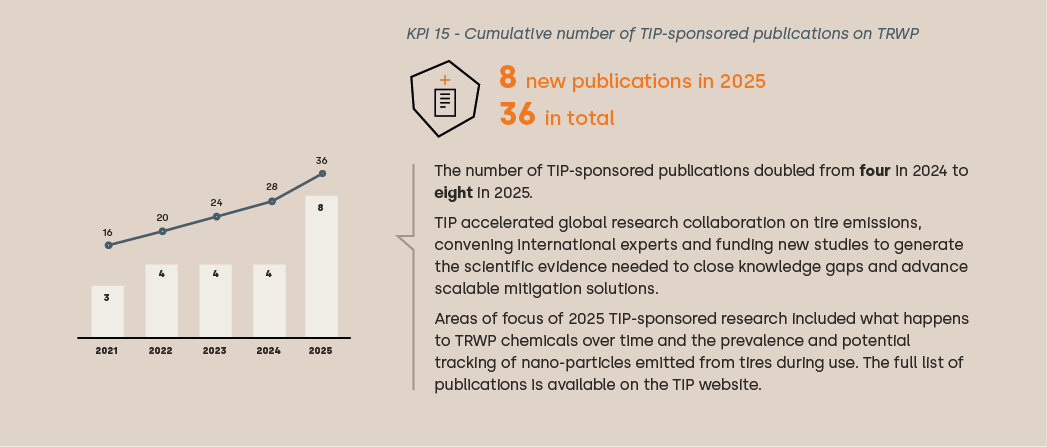
Annual and cumulative number of TIP-sponsored papers concerning TRWP published.

2019-2022
IP 5.01@2x

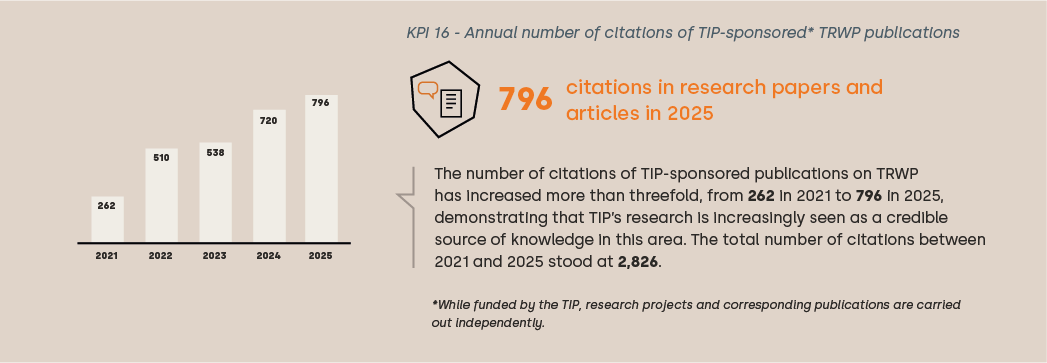
Annual number of citations of TIP-sponsored publications concerning TRWP.

2019-2022
IP 5.02@2x

TIP sponsored eight new peer reviewed publications on tire and road wear particles in 2025, bringing the cumulative total to 36. Citations of TIP sponsored publications rose to 796 in 2025, more than three times the 262 recorded in 2021, reaching 2,826 cumulatively since 2021.